




New
A One Movers LLC – 0552348200
- Office 501 Al Saud Building Al Quasis industrial area 4 Dubai UAE
- 0552348200
- January 14, 2026

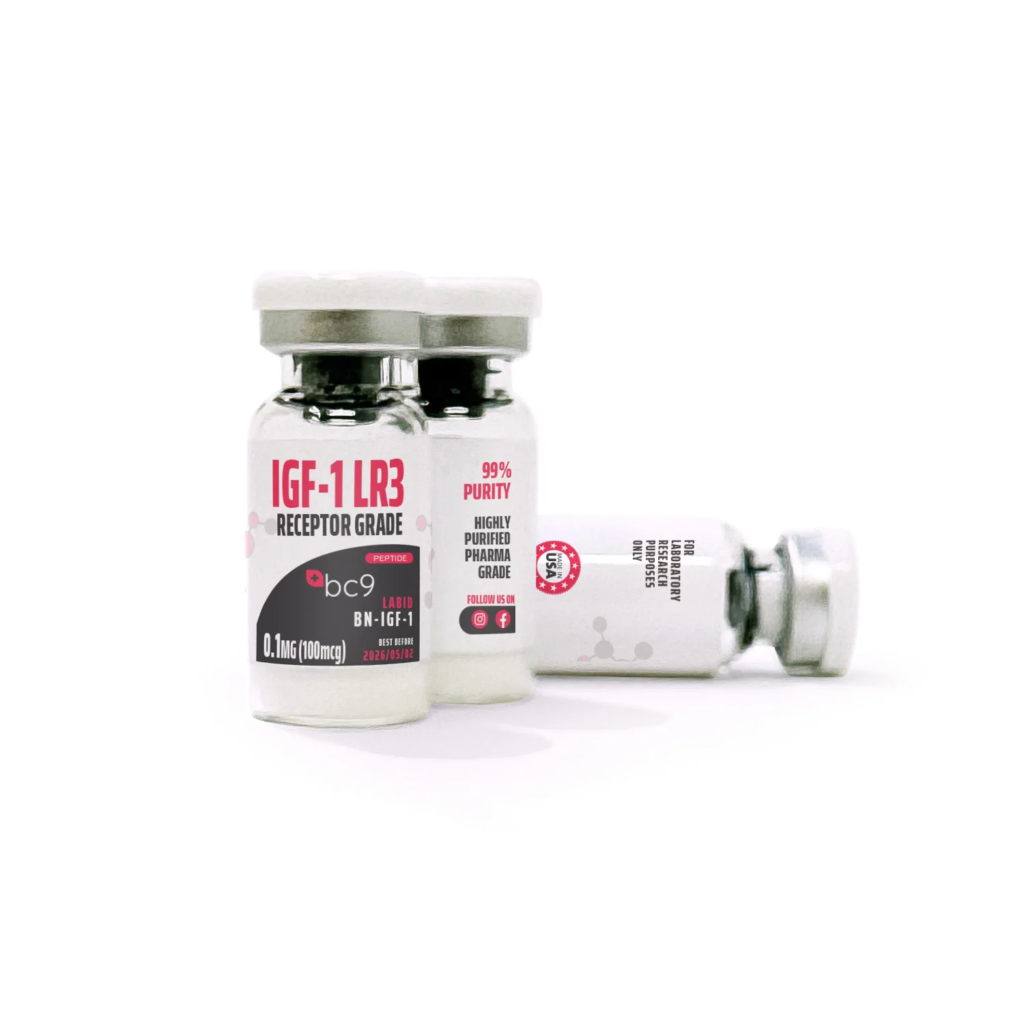
IGF-1 LR3 is a synthetically modified analog of insulin-like growth factor 1 (IGF-1), engineered to enhance molecular stability and extend biological activity in controlled research environments. Through amino acid substitution and N-terminal extension, this research compound demonstrates altered receptor interaction dynamics and reduced binding affinity to endogenous IGF-binding proteins (IGFBPs), making it a focal point of investigation in cellular growth, signal transduction, and metabolic research.
As an IGF-1 LR3 research compound, it is exclusively utilized in laboratory and preclinical studies aimed at understanding growth factor signaling pathways, cellular proliferation mechanisms, and anabolic signaling cascades.
IGF-1 LR3 differs from native IGF-1 through two structural modifications:
These changes contribute to prolonged receptor engagement and enhanced experimental consistency in vitro and ex vivo research settings.
Key molecular characteristics include:
Upon receptor engagement, IGF-1 LR3 activates IGF-1R, a transmembrane tyrosine kinase receptor responsible for initiating intracellular signaling cascades linked to cellular growth and differentiation.
The extended receptor activation profile of IGF-1 LR3 allows researchers to observe sustained downstream signaling effects not typically present with native IGF-1.
IGF-1 LR3 is extensively studied for its influence on mitogenic and differentiation processes across multiple cell lines. Laboratory research frequently explores its effects on:
These investigations contribute to broader understanding in developmental biology, regenerative research models, and tissue engineering frameworks.
In controlled experimental models, IGF-1 LR3 demonstrates interaction with insulin signaling pathways, offering insights into glucose uptake regulation and metabolic homeostasis.
Research observations include:
Such findings support its role as a valuable molecular tool in metabolic and endocrinological research contexts.
|
Feature |
Native IGF-1 |
IGF-1 LR3 Research Compound |
|
IGFBP Binding |
High |
Significantly reduced |
|
Molecular Stability |
Moderate |
Enhanced |
|
Receptor Activation Duration |
Short |
Prolonged |
|
Experimental Consistency |
Variable |
High |
This comparative advantage explains the preference for IGF-1 LR3 in long-duration signaling studies and receptor kinetics research.
IGF-1 LR3 is utilized across a range of laboratory research settings, including:
Its predictable molecular behavior and sustained activity profile make it particularly valuable in experiments requiring prolonged growth factor stimulation.
For laboratory integrity, IGF-1 LR3 is typically handled under controlled environmental conditions to preserve molecular structure. Stability parameters often evaluated in research include:
These factors ensure reproducibility and accuracy in experimental outcomes.
Modern growth factor research increasingly leverages IGF-1 LR3 to explore complex biological phenomena such as:
Its extended activity profile provides deeper insight into long-term signaling dynamics compared to transient ligands.
IGF-1 LR3 stands as a cornerstone IGF-1 analog within laboratory research due to its structural resilience, prolonged receptor activation, and reduced binding interference from IGF-binding proteins. As an IGF-1 LR3 research compound, it offers unparalleled consistency for studying growth factor signaling, cellular metabolism, and anabolic pathways in controlled experimental models.
There are no reviews yet.